
No Journal Required: How One Painter Documents Her Entire Creative Process
Welcome to the part of The Journaling Magazine where we investigate what other people do with all the stuff going on inside their heads.
And no, you don’t have to own seventeen beautiful notebooks, journal every morning at precisely 6:14, or keep colour-coded records of your inner existence to end up here.
These interviews aren’t necessarily about journaling in the traditional sense. We’re interested in something much broader: how people capture, keep, develop or completely fail to record their thoughts, ideas, experiences, memories and creative processes.
That might happen in a journal or sketchbook. Or on a phone, a scrap of paper, the back of an envelope, in photographs, paintings, collections, unfinished experiments, suspicious little piles of things or entirely inside someone’s head.
We want to know where ideas begin, what happens to them along the way, what gets saved, what gets thrown away, what somehow survives for thirty years in a drawer and what disappears forever because somebody was absolutely convinced they would remember it.
Because documenting a life doesn’t always look like a journal.
And that makes it all the more interesting.
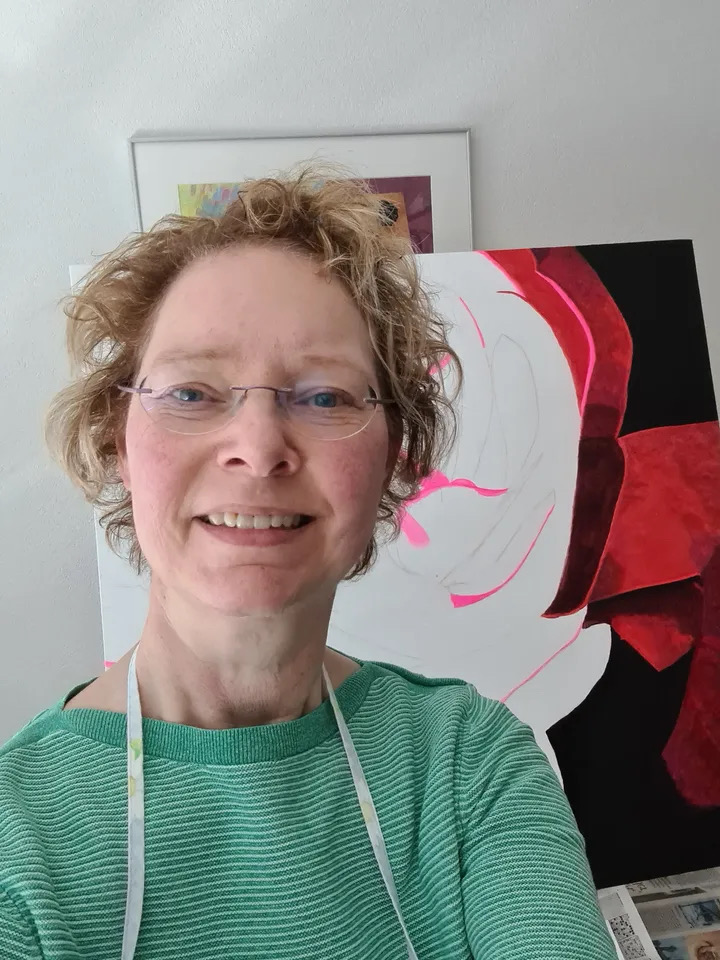
Meet Corrie
Corrie is one of my nicest Threads friends, who happens to know a few things about life, health challenges and art.
She paints with acrylics, collects ideas wherever she finds them, keeps entire painting processes on her phone and apparently has a cupboard where failed paintings are quietly sent to be reconsidered later.
Because before a finished painting ends up on a wall, quite a lot has already happened that nobody ever sees.
Photos have been taken, screenshots saved, colours mixed, ideas rejected, things changed and, occasionally, something has been banished to the aforementioned cupboard.
So I asked Corrie to take us inside her creative process from the first spark of an idea to the finished painting.
Where does a new painting usually begin for you?
A new painting begins with an idea. This can be a photo from a magazine, a photo from the internet, or a photo I took while travelling.
Sometimes I create a composition myself, for example using real flowers, as I did for the painting of the gerberas.
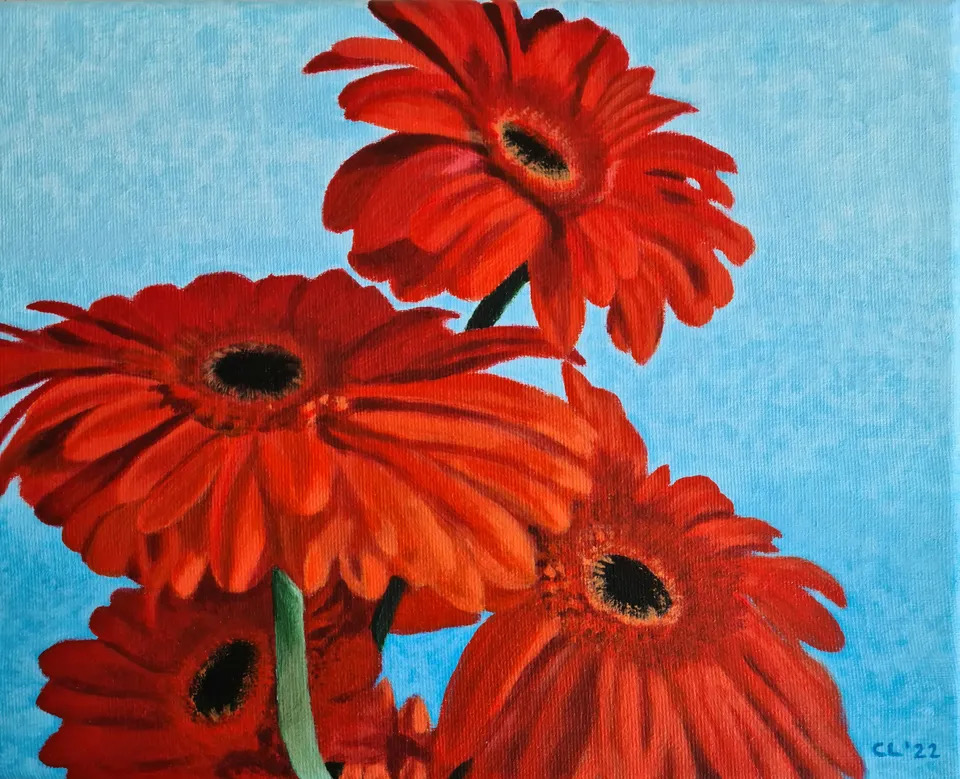
If I make a painting on commission, the client provides the idea, including the photo. I then decide whether or not I will accept the commission.
I am always looking for new ideas or inspiration.
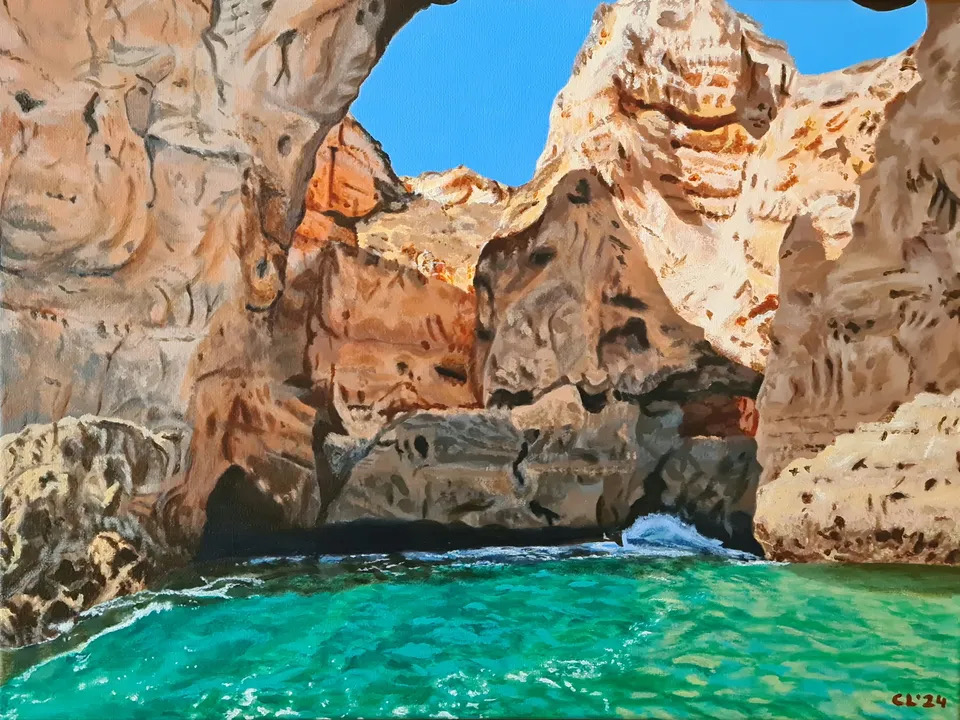
For my painting of the Algarve, for example, I took a photo during a boat trip, which I later developed into a painting.
Do you record your ideas somewhere beforehand, or do they exist only in your head until you start painting?
I usually take a screenshot of ideas, or I choose a photo from a magazine and put it on a separate shelf in the cupboard.
Does what you envision beforehand actually end up in the painting, or do you deviate from it along the way?
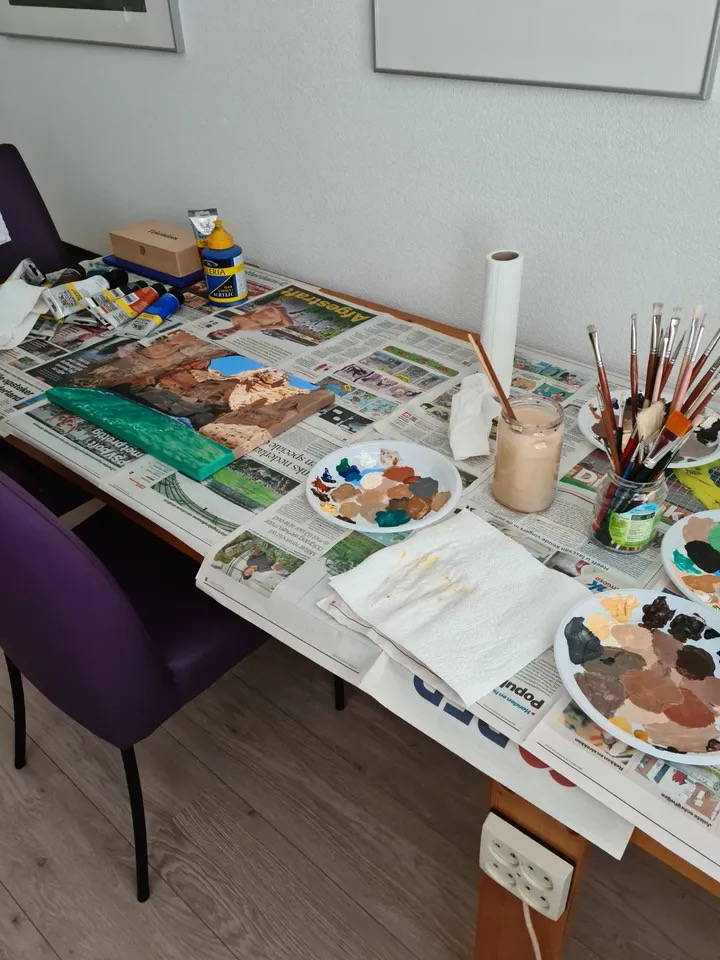
What I envision beforehand usually ends up in the painting. If certain things don’t add anything, I sometimes leave them out or change them. That is my artistic freedom.
The common thread is that my use of colour is always somewhat more intense and expressive than the original photo I base my work on.
Every painting tells a story about the phase of life I am in at that particular moment and about my thoughts and feelings. This happens automatically and cannot be controlled.
What happens to failed paintings, experiments and ideas?
Failed paintings end up in a cupboard. I do keep ideas, as they may still come in useful for a later painting.
But not every idea suits me and/or my painting style, so I sometimes put ideas aside as well. It has to be suitable for painting with acrylics on canvas and I also want to be challenged.
Is it important to you to preserve something of the process, or not at all?
I regularly take photos of the work I am doing. I share these with the client, if there is one, and with others who like to follow the progress. I also talk about the process and explain why I take certain steps, because I enjoy sharing my knowledge.
When I was working on my painting of the rose, the client regularly came by to see my progress.
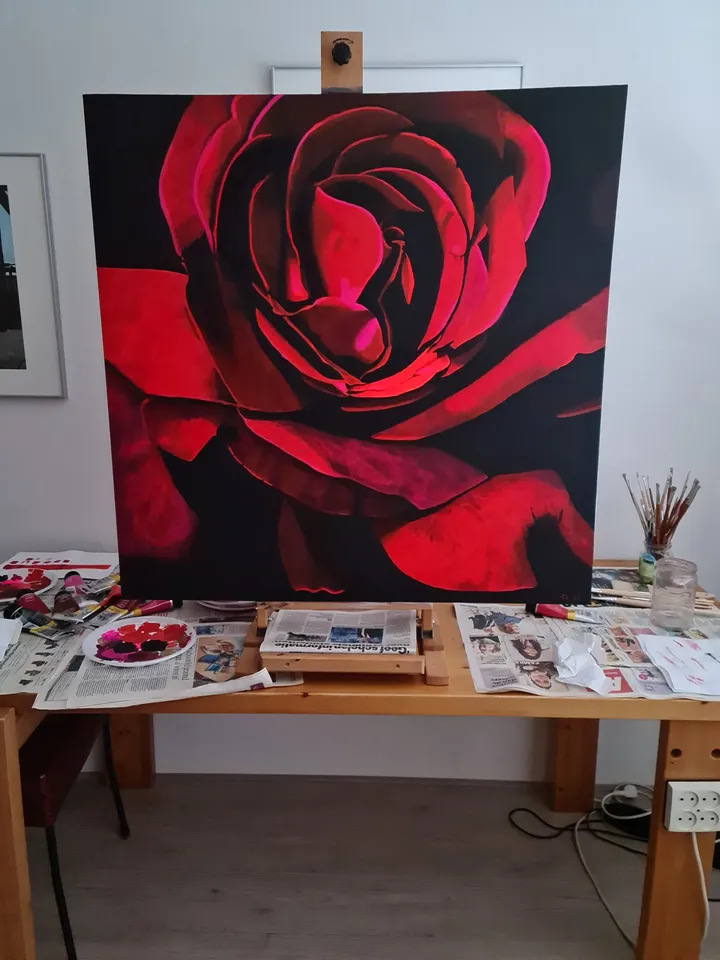
The image I am painting is on my smartphone, so that way I can always see how far along I am in the process and what I still need to do or adjust.
It is always nice to see how a painting develops, from the initial pencil outline on the canvas and the first brushstrokes to the moment of signing it.
A painting is finished when I feel that I have given it my best and that nothing else needs to be added. That moment cannot be predicted.
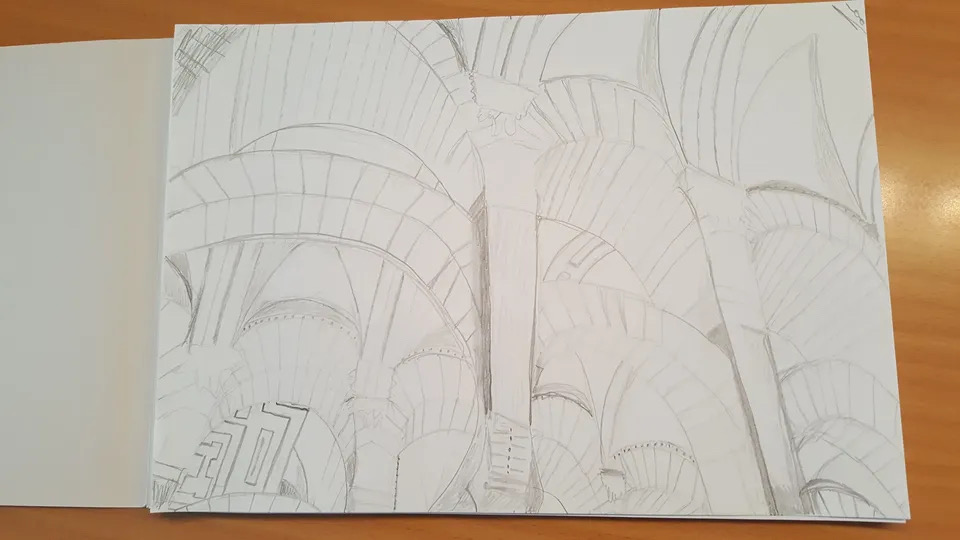
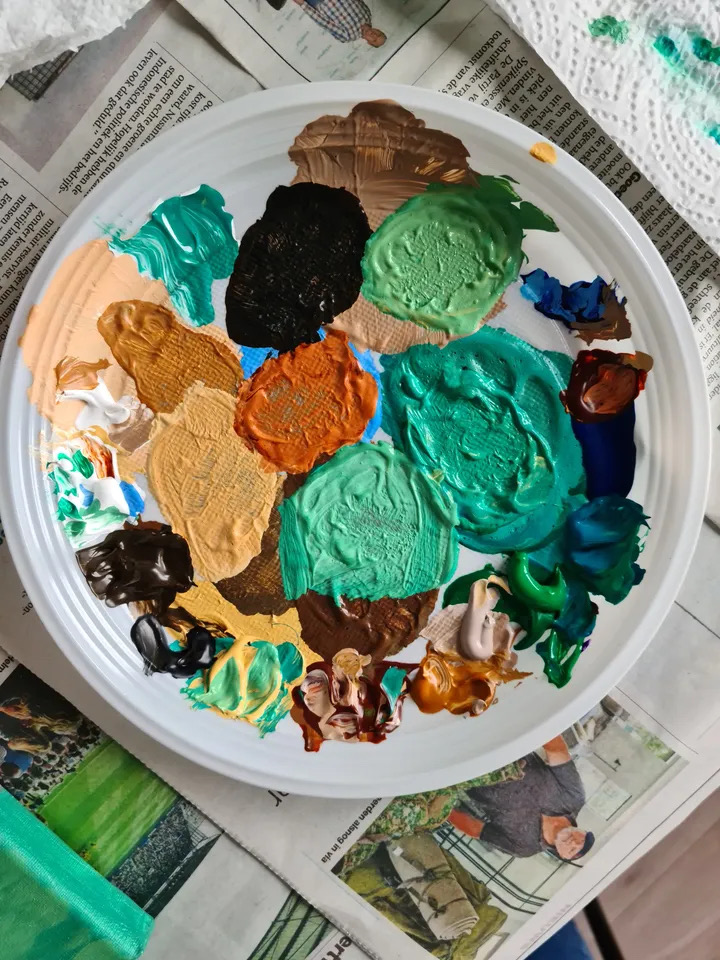
In fact, the entire process from beginning to end is on my phone, apart from a sketch that I sometimes make beforehand and mixtures that I compare on paper.
Is there a painting or other piece of your creative life that means a lot to you?
I am currently working on a painting of the Mezquita in Córdoba. I first made a sketch of it on paper before setting up the painting on the canvas.
When I walked around the Mezquita in 2019, I thought: one day I am going to make a painting of this. The atmosphere and the sense of tranquillity I experienced there made a great impression on me.
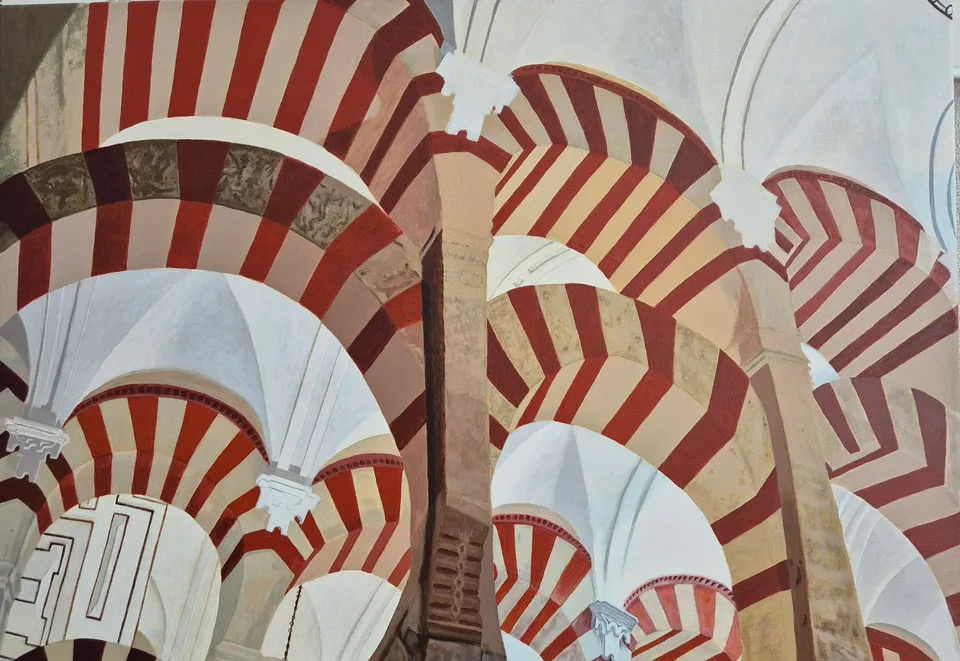
This is an enormous challenge in terms of perspective and mixing all the different shades of colour.
In my view, this will be my masterpiece, but for now it is not finished yet.
I will finish this painting first before possibly accepting new work or starting a piece for myself.
This painting is the one that is dearest to me compared with everything I have made. I will never part with it.
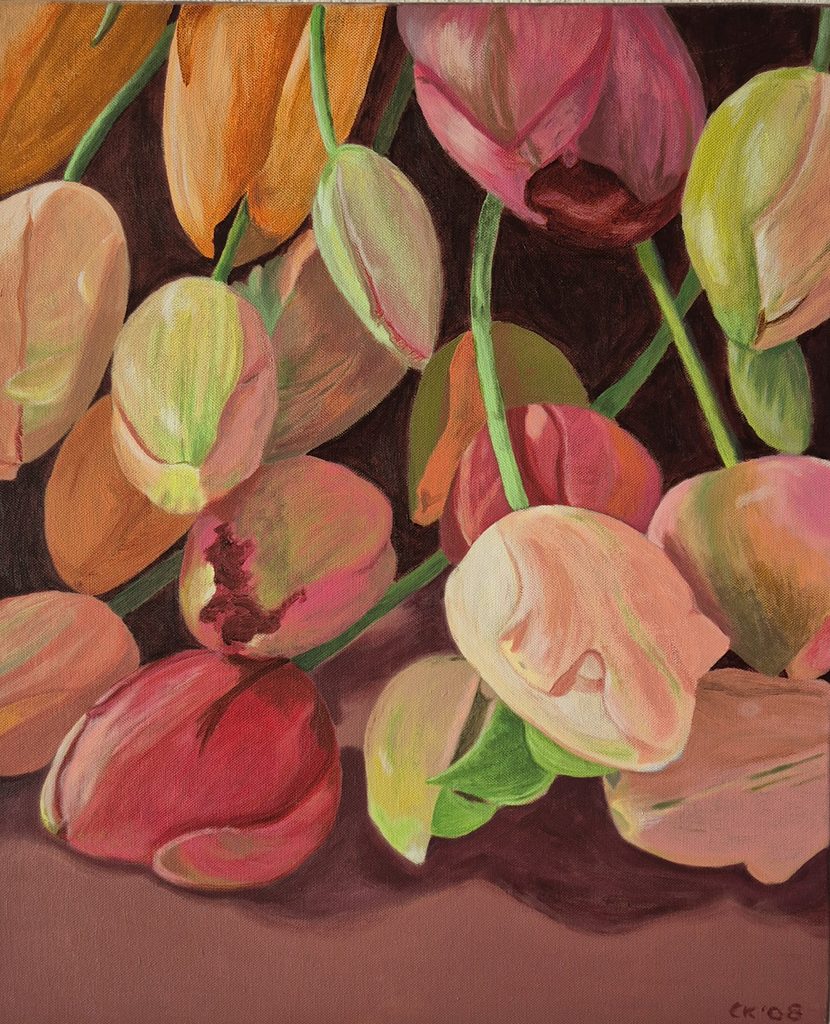
I am most proud of my painting of the Algarve (2024); this was quite a challenge. I also consider the mushrooms (2020), the tulips (2008), the gerberas (2022) and the freesia (2025) highlights of my work so far.
Has the way you create changed throughout your life?
As a child, I already drew a lot, and my drawings were almost always published in the school newspaper. I had high expectations of art class in secondary school. The art teacher emphasised other means of expression, such as linoleum cutting. I grew to dislike the subject and never drew again.
In January 2003, my mother was dying. By coincidence, I read about a course at the art rental gallery I always visited. She encouraged me, and she thought it was a nice idea.
Six months later, the course started, and gradually it became clear that painting with acrylics suited me best. It turned out that I even had talent: I could create depth, and my use of colour stood out.
I took courses until 2009. After that, I did not paint much anymore, until I started again in 2019. My development progressed quickly, and I gained enough experience to be able to solve any technical problem I encountered in painting.
About Corrie
Corrie didn’t originally come from a creative background. After studying economics and languages, she graduated in 1990 and went on to build a career in insurance, working for ING and Nationale-Nederlanden. In 1999, illness brought that career to an end.
Years later, there was finally room for something new: painting.
Painting, she says, has made her happy and helped her regain confidence in her own abilities. Her philosophy is wonderfully straightforward: “As long as you know what you are doing, any painting can be realised.”
Today, she works primarily with acrylic paint on canvas. Problems with her wrist can make painting a serious challenge, but with what she describes as “courage and careful consideration”, she continues to create whenever she can.
And perhaps that is the most interesting part of Corrie’s story: documenting a creative life doesn’t necessarily require a journal or notebook.
Ideas can live in screenshots, photographs, sketches, scraps of paper or on a phone.
What matters isn’t where you keep them, but that somehow, somewhere, pieces of the process are preserved from the first spark of an idea to whatever it eventually becomes.
Corrie on Threads: https://www.threads.com/@corregie_66